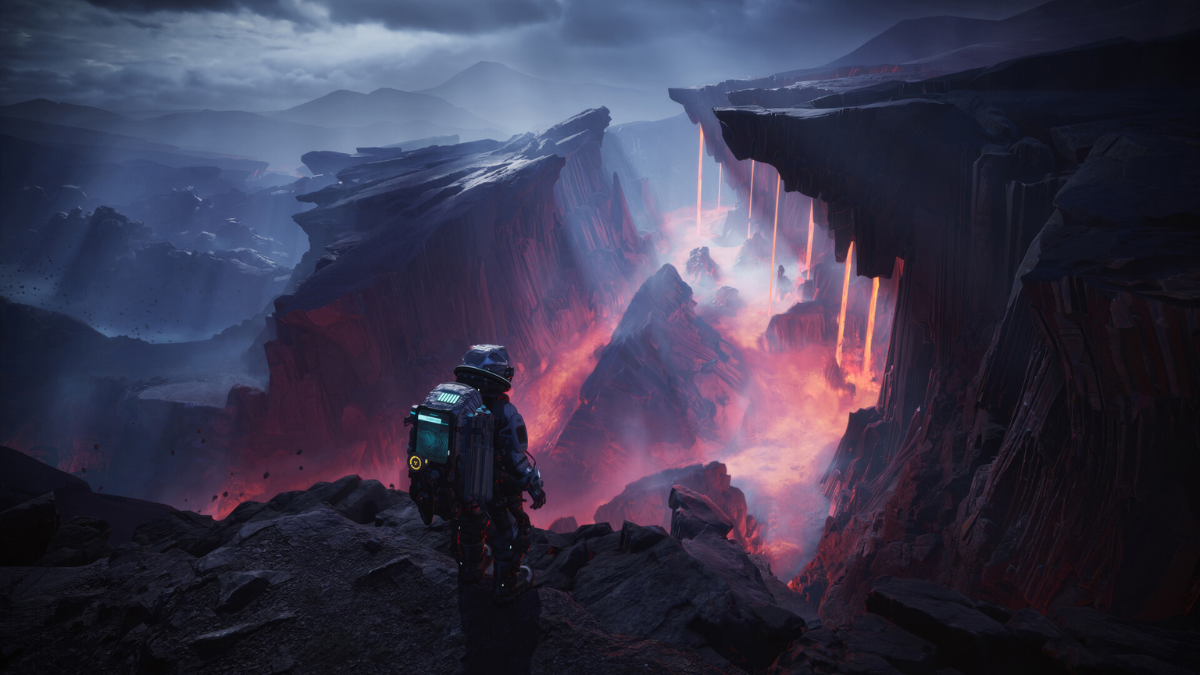
The Alters: Secret Messages Deciphered & Endings Explained
Alright, before we start, full spoiler warning. I’m not kidding. If you haven’t finished The Alters yet, stop reading here. This game lives and dies on its endings, and once you see behind the curtain, you can’t unsee it.
What I want to do in this post is walk you through something I completely missed on my first playthrough, and honestly, I think a lot of players did too.
Those weird encrypted messages at the end are not just aesthetic noise. They’re deliberate, meaningful, and they quietly confirm what actually happens to Jan and the Alters after the credits roll.
This is me stitching everything together, based on what the game shows us and what those secret messages imply.
This is still my interpretation, shaped by my own experience with the story, so if you see something differently, that’s kind of the point. The Alters wants you arguing about it.
The encrypted messages most people ignore
At the very end of the game, Jan’s computer shows an email inbox with what looks like encrypted junk text. At first glance, it feels like a visual flourish, something meant to suggest secrecy without actually saying anything.
But, those messages are real. They’re encrypted using a modified Vigenère cipher, not just letters but the entire printable ASCII range. And when decoded, they reveal three distinct messages tied directly to the ending path you chose.
That alone tells us something important. These messages weren’t meant for the player. They’re part of the world continuing after you’re done. You’re not the center of the universe here. Jan leaves a mess behind, and the universe keeps going.
All three messages are sent by someone identified only as J, using different cipher keys depending on the ending.
The transcripts and what they mean
Let’s go through them one by one, because each one quietly confirms a very different future.
pierogi (Corporation)
“Reached next destination safely. Still no sign of corpo sleuths. Good reason to party. Wish you were here, bro.”
This one hit me immediately. The key word pierogi and the casual “bro” make it very clear who this is. This is Jan the Technician.
No fear. No panic. No pursuit.
That alone tells us the Alters are alive. They got away. Whatever network or resistance exists beyond the planet is still functioning, and the corporation failed to fully clamp down. This is the ending where the system cracks, even if only slightly.
steward (Corporation)
“As I feared, all tracks have been covered up. I’m sorry, Jan, but it looks like the corporation has disposed of your alters on the Q.T. and left no traces.”
This one is brutal.
It reads like a detective report, someone Jan hired to find out what happened after he chose comfort and compliance. And the phrasing is cold, clinical, corporate.
“Disposed of.”
“No traces.”
Nothing poetic here. Just cleanup.
This is the ending where Jan sells out the Alters and is rewarded for it. He’s safe, he’s wealthy, and he’s hollow. The corporation wins, and whatever power structure existed before stays firmly in place.
steward (Maxwell)
“The trail ends in Maxwell’s lab. But I can’t dig deeper. The place looks more like a military base than a scientific facility, Jan. Extremely protected. I’m afraid my job is done here.”
This one made my stomach drop.
Because this is worse than death.
This tells us the Alters didn’t disappear. They were taken. Classified. Locked behind blast doors and armed checkpoints. Whatever Maxwell is doing, it’s not theoretical science anymore. It’s weaponized, militarized, and sealed away from accountability.
Jan survives here too. He even thrives, in a way. New identity. New life. But it’s not freedom. He’s owned.
What the endings are actually saying
Once you line everything up, the game becomes much clearer. There are technically multiple endings, but philosophically, there are only three outcomes.
- One, you resist the system and pay for it, but the Alters live, and the corporation loses its grip.
- Two, you integrate, betray them, and are rewarded with comfort while they quietly vanish.
- Three, you choose Maxwell, and trade your soul for survival inside a machine far bigger than you.
The encrypted messages exist to confirm this. They’re documentary evidence that the world doesn’t freeze when the credits roll. Consequences ripple outward.
And the fact that they’re encrypted matters. These messages were never meant to be seen by you. Or maybe not by this Jan. Maybe they’re corporate secrets, or private confessions, or paranoid attempts to bury the truth.
The small details that change everything
There are tiny visual clues that completely change how you interpret your ending.
If you see photographs on the table near the computer, that’s huge. That implies the Alters are alive, communicating, living near the oasis. The oasis itself is another massive implication. With Jan the Scientist allowed to continue research, it becomes a self sustaining future, potentially capable of recreating anything using planetary minerals.
If you see a badge instead, congratulations, you’re employed. And the Alters are almost certainly dead.
The trial outcomes matter too. If you don’t betray the Alters, characters like Lena or Lucas will stand with you. House arrest, prison time, consequences, but dignity. If you do betray them, you walk free, and the silence around their fate tells you everything you need to know.
Lena, the Botanist, and the cruelest truth
The Jan Botanist ending deserves its own conversation, because emotionally, it’s the most deceptive.
On the surface, it feels hopeful. He tells the truth. Lena thanks him. There’s warmth there. But listen closely to her words. She keeps referring to the original Jan as “the real one.” The hero. The one who made the sacrifice.
And she’s right.
When the Botanist confesses his love at the end, her response is gentle but final. “Thank you… but I need time.” We all know what that means. Her heart belongs to someone who no longer exists.
The Botanist isn’t wrong. He’s not lesser. But he’s not him. He’s chasing a Lena from another reality, one who carried his child, one who lived a life that this Lena never did.
Letting him cling to that illusion isn’t mercy. It’s cruelty. What he really needs is to let go and accept that this Lena is not his, and never will be.
Why the original Jan ending feels right
Compare that to the ending where the original Jan survives.
There’s no hesitation. When Lena wants to meet after the trial, he doesn’t panic, doesn’t explain, doesn’t plead. He doesn’t need to. His actions already defined him.
That confidence, that quiet certainty, is earned. He paid the price. He didn’t outsource his humanity.
And for me, that’s why this ending feels like the game’s emotional core. Not the happiest, not the cleanest, but the most honest.